



How to Teach Your Toddler to Ride - A Parent’s Guide to Scooters for Toddlers
Discover the perfect age to introduce scooters for toddlers and help your toddler develop balance, coordination, and confidence.
This comprehensive guide will help you understand when your child is ready and exactly how to ride a scooter kid-style, making learning fun and safe for every young adventurer.
Welcome to Toddler Scootering!
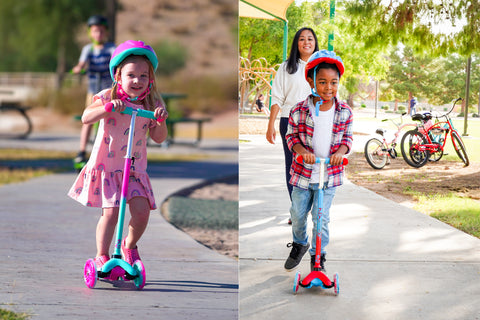
All parents know that toddlers have an unnatural amount of energy. Getting your kid riding a scooter outside is one of the best ways to burn through those crazy energy levels.
Many parents wonder about the ideal age for scooter introduction-typically, most children are ready around 2–3 years old. Understanding how to ride a scooter kid basics comes naturally to some, while others find it more difficult. We've put together this guide to help you understand the appropriate age for these activities and how to coach your child safely.
Determining how old to ride scooter equipment depends on your child's individual development. Scootering comes naturally to some toddlers while others find it more difficult. We've put together this comprehensive guide to help you understand what age for scooter activities is appropriate and how to teach your toddler how to ride safely with scooters for toddlers.
Understanding the Right Age for Scooter Introduction
Determining the perfect age for scooters for toddlers is the first step in ensuring your toddler's success. Most children are ready to begin learning around age 2–3, but the exact what age for scooter introduction works best depends on several developmental factors.
Developmental Milestones to Consider:
Balance and Coordination
Can your kid riding scooter gear walk and run steadily? This is crucial for success.
Following Directions
Understanding basic instructions helps when learning how to ride a scooter kid safely.
Physical Strength
Adequate leg strength to push and steer is essential.
Attention Span
Ability to focus for short periods ensures productive practice sessions.
Age-Specific Readiness Signs:
- 2-3 Years: Ideal age for scooters for toddlers with three-wheel models
- 3-4 Years: Most children master basic how to ride a scooter kid skills at this age.
- 4-5 Years: Transition age for scooter upgrading to two-wheel models
Remember that these are general guidelines. The right age for scooter learning varies for each child. Some advanced 2-year-olds might be ready, while some 4-year-olds may need more time.
Start With the Right Equipment
Choosing appropriate scooters for toddlers is crucial for building confidence and ensuring safety. The equipment you select should match both your child's age for scooter readiness and their physical capabilities
Two-Wheeled vs. Three-Wheeled Scooters:
We recommend that toddlers aged 3 years and under start with a three-wheeled scooter. If your toddler has an exceptional sense of balance, you might consider a two-wheeled model, but keep in mind this will be more difficult for a how to ride a scooter kid beginner.
Three-Wheeled Scooters - Ideal First Choice
Zycom Zipper Scooter
For three-wheeled scooters for toddlers, our team recommends the Zycom Zipper Scooter. This scooter has features that parents will love and additional elements that toddlers adore.
Product Features:
- Durable yet lightweight quality construction perfect for young riders
- Madd Flip-It motion-activated light-up wheels that entertain and motivate
- Three-stage height adjustable handlebar that grows with your child
- Carving action pivot steering system that enhances stability
- Low-profile stable and wide deck for confidence-building balance
- Flanged non-slip handlebar grips for small hands
Two-Wheeled Scooters - For Advanced Toddlers

Carve 100 Scooter
If your child already has some experience with scooter riding or has a good level of balance, you might consider a two-wheeled scooter. We recommend the Carve 100 for toddlers 3 years and up who show advanced coordination.
Product Features:
- Durable & light-weight construction for easy handling
- 3-stage height-adjustable handlebar with comfort foam grips
- Easy-lock folding system for storage and transport convenience
- Smooth rolling 100mm composite core wheels & quick-stop brake
Protective Gear
Before your kid riding scooter starts riding, make sure they have a helmet! You can also add elbow or knee pads for extra precaution. The Zipper scooter always comes with a matching CPSC approved helmet-ideal for scooters for toddlers.
Helmets
Non-negotiable for every riding session. Ensure they are certified and pass required safety standards.
Shop HelmetsComplete Sets
The Zycom Zipper comes with a matching helmet for complete protection right from the start.
Shop Zipper with HelmetIntroduce Riding Slowly
The approach to teaching how to ride a scooter kid skills significantly impacts your toddler's confidence. Rushing the process can create anxiety, while a patient, step-by-step approach builds enthusiasm.
Gradual Learning Steps:
1. Practice Standing First
Balance is key to riding a scooter successfully. Have toddlers grab the handlebars, stand on the platform, and experiment with steering without moving.
2. Start Indoors on Soft Surfaces
Begin indoors when the scooter is brand new. Practicing on carpet before hitting cement helps a kid riding scooter build confidence.
3. Use Positive Reinforcement
This is the time for helicopter parents to take a backseat and use positive affirmations when your child is riding to build confidence.
4. Create a Safe Practice Environment
Choose flat, smooth surfaces away from traffic. Ensure adequate space for wobbles and mistakes.
The pace of learning scooters for toddlers skills varies greatly among children. Some may glide confidently within days, while others need weeks of practice. The key is following your child's lead.
Lead By Example
Children learn tremendously through observation. Showing your how to ride a scooter kid apprentice how it's done rather than just telling them can significantly impact their willingness to learn. Use parental participation to demonstrate that scootering is a safe, enjoyable activity.
Parental Participation
When your toddler sees you riding confidently, they understand that scootering is a safe, enjoyable activity.
Joint Learning Activities
Practice sessions where both parent and child ride together create valuable bonding experiences.
Adult Scooter Options
Don't have a scooter yourself? Check out our commuter scooters for adults and lead by example!
Making Scootering a Regular Habit
When learning something new, consistency makes a huge difference in ability and confidence. Make it a habit to go riding on your scooters once a week.
When your toddler gets the hang of it, they will want to ride more than once a week, trust us! And with your adult scooter, you can spend some quality time together outside.
Safety Gear Essentials for Young Riders
Before your kid riding scooter starts moving, proper safety equipment is non-negotiable, regardless of their age for scooter readiness. The right gear protects your toddler and gives you peace of mind during the learning process with scooters for toddlers.
Essential Protective Equipment
- Helmet: Absolute necessity for every riding session
- Knee and Elbow Pads: Extra protection for common fall areas
- Closed-Toe Shoes: Secure footwear for proper footing
- Wrist Guards: Optional but recommended for added safety
Helmet Selection Guide
If you choose a three-wheeled scooter, the Zycom Zipper scooter always comes with a matching CPSC-approved helmet. We also have helmets for kids with bigger heads that are EPS approved.
Proper Fit Checklist
- Helmet sits level on the head (not tilted back)
- Straps form a V under each ear
- Buckle centered under the chin
- No more than two fingers width between chin and strap
Establishing Safety Habits
- Make gear-wearing non-negotiable from day one
- Teach your child to perform pre-ride safety checks
- Establish clear boundaries for where riding is permitted
- Model safe riding behavior yourself
By prioritizing safety from the beginning, you're teaching habits that will protect your child regardless of their age for scooter activities or skill level.
Frequently Asked Questions About Age and Scooters
What is the ideal age for scooter introduction?
Most children are ready around age 2-3. Three-wheel models are ideal for teaching how to ride a scooter kid basics during this initial introduction. The exact age for scooter readiness depends on individual development, including balance, coordination, and ability to follow directions. Three-wheel models are ideal for this initial what age for scooter introduction.
How old should a child be to ride a two-wheeled scooter?
Typically, children transition to two-wheeled scooters for toddlers around age 4-5, but this varies based on individual ability. The transition age for scooter upgrading depends on confidence, balance skills, and previous experience with three-wheel models.
What if my toddler is afraid of the scooter?
This is common, especially at the younger end of the appropriate age for scooter spectrum. Go back to basic steps: let them play with the stationary scooter, demonstrate riding yourself, and use positive reinforcement. Never force participation—this creates negative associations.
How long does it take for a toddler to learn?
The learning timeline varies greatly. Some children grasp how old to ride scooter basics in a few sessions, while others need several weeks. Consistency and patience are more important than the specific age for scooter mastery.
Are there signs my child isn't ready yet?
If your child struggles with basic balance, cannot follow simple instructions, or shows extreme anxiety, they might need more time before tackling scooters for toddlers. There's no harm in waiting a few months before reintroducing the activity.
Progressing to Two-Wheeled Scooters
Recognizing when your child is ready to advance is an important milestone. This typically occurs between 4-5 years. When they master steering on a three-wheel model, they are likely ready to learn how to ride a scooter kid style on two wheels.
Signs of Readiness for Two Wheels:
- Masters steering and stopping on three-wheel model
- Demonstrates confident balance while riding
- Shows interest in more challenging riding
- Physically tall enough to properly handle two-wheel equipment
Transition Tips:
- Lower the deck initially for better stability
- Practice in familiar environments first
- Use supportive language during the transition
- Celebrate the achievement as a major milestone
Remember that the journey with scooters for toddlers is about more than just physical skills—it's about building confidence, creating memories, and establishing a foundation for active living.
Have More Questions?
Have more questions about the right age for scooter activities? Visit our expert team at Madd Gear for personalized advice tailored to your child's specific development and needs. We're here to help you make the best choices for your family's scootering journey!
Make It a Habit: When learning something new, consistency makes a huge difference in ability and in confidence. Make it a habit to go riding on your scooters once a week. When your toddler gets the hang of it, they will want to ride more than once a week, trust us!
Start Your Toddler's Scooter Journey Today
Have more questions about the right age or how to ride a scooter kid? Visit our expert team at Madd Gear for personalized advice tailored to your child's development.
Shop Toddler Scooters


Leave a comment